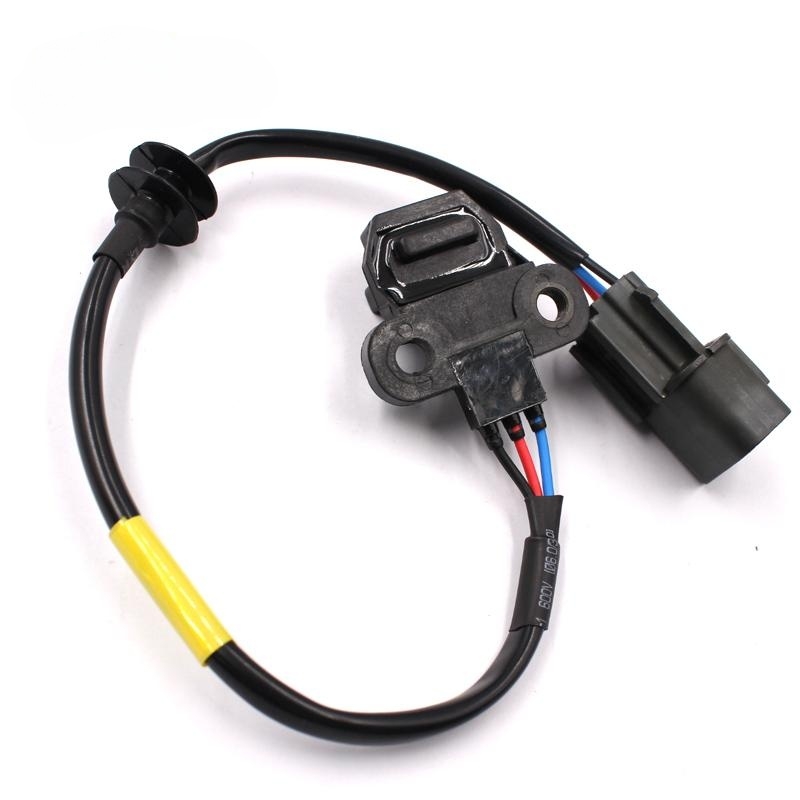
**Understanding the Role of the Crankshaft in a Car Engine**The crankshaft is one of the most critical components in a car engine, playing a pivotal role in converting the linear motion of the pistons into rotational motion that ultimately powers the vehicle’s wheels. As a central part of the engine's bottom end, the crankshaft must endure tremendous forces while maintaining precision and durability — qualities vital for efficient engine performance and longevity.**What is a Crankshaft?**In essence, the crankshaft is a long, heavy metal shaft that runs the length of an engine block. Connected to the pistons via connecting rods, it translates the pistons’ up-and-down movements inside the cylinders into a rotating motion that drives the car’s transmission system. This transformation is fundamental because the wheels of a car require rotational movement to turn and propel the vehicle forward.**How the Crankshaft Works**When the fuel-air mixture inside an engine's cylinder combusts, the explosion pushes the piston downward. This reciprocating motion is converted by the connecting rod into a rotating motion by the crankshaft. The crankshaft’s offset crankpins create leverage to amplify this motion and transmit it smoothly via the flywheel to the transmission. The result is a seamless conversion of chemical energy from fuel into mechanical energy driving the vehicle.**The Importance of Materials and Precision Engineering**Given the enormous stresses and high rotational speeds involved, crankshafts must be manufactured from high-strength materials like forged steel or cast iron alloys. Advanced heat treatment and precision machining processes ensure that the crankshaft can resist wear, fatigue, and deformation over thousands of operating hours.Balancing the crankshaft precisely is also essential. An unbalanced crankshaft generates excessive vibration, causing mechanical issues and discomfort for passengers. Thus, manufacturers employ dynamic balancing techniques during production to maintain engine smoothness and reliability.**Maintenance and Signs of Crankshaft Problems**Although designed for long service life, crankshafts can suffer damage due to factors such as inadequate lubrication, extreme engine loads, or manufacturing defects. Symptoms of crankshaft problems include unusual engine noises like knocking or grinding, excessive vibrations, decreased engine performance, and oil leaks around seals.Timely diagnosis and repair are crucial. Engine rebuilds or crankshaft replacements involve specialized machining processes such as grinding and polishing, often performed by skilled technicians using advanced equipment.**Industry Advances and Innovation**Modern automotive engineering continues to improve crankshaft design and manufacturing, with innovations such as lightweight forged alloys, computer-aided design (CAD) optimization, and surface treatments like nitriding to enhance strength and wear resistance. These advances contribute to higher engine efficiency, lower emissions, and improved vehicle durability.**About [Company Introduction]**[Insert company introduction here - describing the company’s expertise, history, manufacturing capabilities, commitment to quality, and any unique technologies or services related to crankshaft production or automotive engineering.]**Conclusion**The crankshaft, though often overlooked by everyday drivers, is undoubtedly one of the most vital engine components ensuring vehicle performance and reliability. By combining advanced materials science, precision engineering, and ongoing innovation, the automotive industry continues to refine crankshaft technology, supporting smoother, more efficient, and more durable engines for the vehicles of today and tomorrow.---*Note: Replace the bracketed section "[Insert company introduction here]" with the specific company information you want included to complete this article.*
Read More